All posts by Gerhard Marx

Psychiatrist and Woodworker

Holiday tool finds

11/1/2016

After my (by now) usual antique shop rounds in the Garden Route area  during December, these are the fruits of my looting.

A no. 131B Yankee ratcheting screwdriver.

I already have two of these so this one will probably become the property of one of my young apprentices, Connor Burmeister-Nel. It has both the Stanley and Yankee brandnames on it and was made in Germany, which means that it was definitely made after 1946 when Stanley bought out North Brothers. It is the first one I see that was made in Germany, so I asked Robert Demers of The Valley Woodworker to investigate what that means in terms of it’s age. (Bob has subsequently published this excellent article on the topic)

The other no.131’s I own were both made in the UK. One of those also sport both brand names and the other has only the Stanley brand name. The latter screwdriver also has a plastic handle which is not nearly as nice to work with as the wooden handles on the other two. What that one has going for it however is that it was bought new by my father-in-law back in 1978. It will therefore become my son Didi’s “Yankee”. I bought the pictured Yankee for US$ 7.41 on todays exchange rate.

IMG_5758IMG_5760IMG_5761IMG_5762

A key hole saw

At least that is what I think it is called. It has no makers mark, a very nice brass thingy (once again JNSQ woodworking delivers cutting edge technical terminology)  that holds the blade and a Beech handle. My guess is that it is British in origin. (US$ 10,38)

IMG_5763IMG_5764IMG_5765IMG_5766IMG_5767IMG_5768IMG_5769IMG_5770

I bought this spanner for decoration purposes only. It is massive to say the least. It is striking a pose with a shot glass loaded with Jaegermeister. (US$ 2,08 The metal must be worth more than that)

IMG_5771IMG_5772IMG_5773IMG_5774IMG_5775

Rabone 3′ two fold boxwood rule

It looks to be pretty much unused. (US$ 11.56)

IMG_5779IMG_5781IMG_5780

S. Tyzack & Son back saw

It is in a very good condition and will make a very fine user after some minor rehab. I plan to joint and resharpen. I paid US14,82 and from the looks of it, it must be worth at least US$ 100. If anyone has more intimate knowledge of these saws and their history I would love to hear from them.

IMG_5782IMG_5783IMG_5784IMG_5785IMG_5786IMG_5787

Stanley no. 49 bit gauge in original box

It is clearly brand new/unused. They are used a stop gauge on one’s auger bits. (US$ 5,87)

IMG_5788IMG_5789IMG_5790IMG_5791

Handmade 6″ dividers (US$ 10,38)

IMG_5792IMG_5793IMG_5794

Unused Stanley no. 45 combination plane in wooden box

All the parts are present apart from possibly the screwdriver that came with some of these sets. It is clear from looking at the fence and blades that it has never tasted any wood. I paid US$ 56. Similar sets usually cost between US$250 -300 from Jim Bode.

IMG_5798IMG_5799IMG_5800IMG_5801IMG_5802IMG_5803

Cross peen hammer

Unfortunately I did not take a picture of this little hammer before replacing it’s handle and doing some cosmetic/functional reshaping of the head. I furnished it with a Assegaai handle, which was shaped using a drawknife and card scraper. It was wedged using a wooden and a metal wedge. I bought it for US$ 1,48 in a pretty dreadful state. It had a metal pipe for a handle that looked like it was fitted by a backyard butcher.

IMG_5929IMG_5930IMG_5931IMG_5932

A no. 130A Stanley Yankee ratcheting screwdriver with three bits

The is the medium sized model in a superb working condition. It was given to me by my cousin (once removed) the Urologist. I am not sure whether there might be some Freudian subliminal meaning to his gesture (coming from a Urologist??), but it was much appreciated. This screwdriver originally belonged to his uncle who died some years ago. I already had one of this particular size, which I will now be passed on to my son. Then I can use this one given it’s history.(US$ 0)

IMG_5923

Disston D-8 (26″ 7 tpi) circa 1947-53 (based on the medallion) and made in Canada

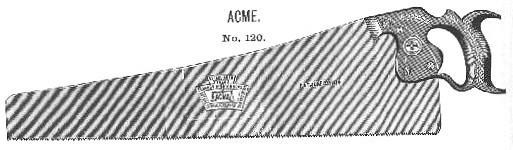
This saw was also a present from my cousin. It belonged to the same uncle. I plan to straighten the blade, make a new handle (based on a Disston no. 120 from the 1876 catalogue) and sharpen it for my apprentices. Comparing it to my two pre-1900 Disston no. 12s, it is shocking to see how the saws of this iconic company deteriorated over a 50 year period. The handle is can only be described as inferior in every aspect to the earlier offerings by Disston.

Mark Harrell of Bad Axe advised me not to waste the time and effort, but it will not cost me any dough and you always learn something from a restoration project even if it is that you should not have bothered. He did however say that the quality of the blade should be top notch, but had some concern regarding the amount of rust.

IMG_5920IMG_5922IMG_5926acmecat1876a

I would appreciate more information on any of these tools, so to all those tool geeks out there, go mental.

26/1/2016

Here is some feedback I got from my friend Bob Demers (aka The Valley Woodworker). He is such an expert on this topic that I though everyone could benefit from reading this:

BTW here are some things I noticed in your last post on your loot 🙂

That Disston saw is from the 50s judging by the poor resemblance of a once gracefully shaped handle, sad isn’t …

If you do make a new handle, and I encourage you to do so, pay close attention the holes locations, and the orientation of the existing hand hold on the handle

Because that is what determined this saw hang angle

http://thevalleywoodworker.blogspot.ca/2015/06/part-2-mysterious-saw-hang-angle.html

I would not be too concerned with the blackened appearance of the saw blade. Although I understand why Harrell says you should not bother too much with it (because they are plentiful and better ones can easily be found, around here in NA anyway), as long as there is not tooo much pitting, all is fine.

Yes, normally a shiny plate work to our advantage, since it glide easier and by watching the wood reflection on the blade you can see easily when you are at 90 degrees

BUT, no big deal (Sandvik even made saws with a black Teflon like coating on some of their saws, what is more important in this case is the reduced friction.

That even blackish coating is often a layer of oxidation that prevent further rusting by making a barrier.

I would simply scrape gently the blade surface with razor blades and some sort of penetrating oil like WD40 (very messy uses lots of paper towels or rags)

It should smooth out the blade, remove any rust incrustation and protect the maker etching on the blade.

If you were to sand it, you would probably obliterated quickly.

I would finished the job with a light sanding using a flat solid block (piece of wood, no sponge, cork or other flexy bit, in order to protect the ewtching.

Finished the job with a light wax and buffing application and voila, one slick blade gliding in the wood regardless of blade color 🙂

It would also make a great candidate for practicing saw sharpening and setting.

Your so called keyhole saw is known as a Pad Saw, and you are correct in saying that it looks English, cause it is. Often the only markings to be found are on the blade itself

And yes, it can be used as a keyhole or small compass saw.

http://thevalleywoodworker.blogspot.ca/2015/06/specialty-saws-cutting-curves.html
Firewood trays

9/11/2015

This project is really not much to write home about, but the reason why it is significant to me is that it is the first that my son and I worked on together. He seemed to enjoy it and managed to stay interested and focused on the task for quite a few hours at a time. What surprised me was how much it sped up the progress as I have been working all by myself for so many years now. What would have taken me a whole day were polished off in an afternoon.

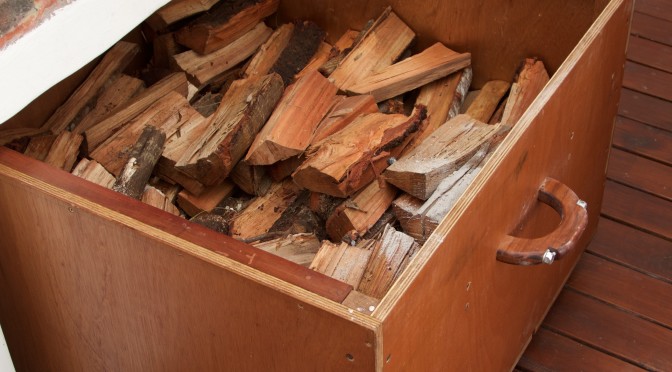
Anyway, back to the actual project. I wanted to build two monster trays to house the firewood at our beach house. It used to be a constant pain in the butt, having to crawl underneath the braai to grab more wood for the fire. I used two sheets of plywood and recycled Meranti for 90% of the project.

IMG_5441IMG_5442

This is what the Meranti looked like before we got stuck into it. There is an interesting story around this Meranti, which is one of the reason why I chose to use it for this project. A good friend of mine works as a contrator in the building industry here in Windhoek. He was doing some work for a government department renovating/refurbishing a house just around the corner from us. According to the officials the house was being renovated to act as an official abode to the Father of the Nation himself, during times he decides to spend time in the capital. For those of you who are unfamiliar with Namibian Politics, I am referring to Sam Nujoma.

Seeing that it was a fairly comprehensive refurbishment, all the old fixed cabinetry were removed. The Meranti used to serve as the framework of some of the original built in cupboards. The house was probably built some time during the late 1960’s or early 1970’s, which means that it is pretty stable by now and is quite clearly of a much higher quality than what we can buy around here these days.

As you can see it was painted, which I removed by planing it after all the screws etc were removed.

IMG_5456IMG_5457

16/11/2015

My Lie-Nielsen twin screw vise came in very handy while cutting a few wide (or possibly ‘lazy’) finger joints.

IMG_5458IMG_5459IMG_5460IMG_5461IMG_5462IMG_5463IMG_5464IMG_5465IMG_5467

30/11/2015

Here we are doing the first assembly.

IMG_5497IMG_5498

One thing that is now well and truly part of my essential woodworking paraphernalia is this Tomato paste tin. I always keep some oil in there to dip wood screws in before driving (cleverly avoiding the alternative way of expression which would not be acceptable on a ‘family website’ like this) them home with a Yankee ratcheting screwdriver. It makes a world of a difference as a result of the lubricating qualities (treading on thin ice here) and probably has some beneficial effect in preventing corrosion.

IMG_5500IMG_5499IMG_5495IMG_5494IMG_5496IMG_5536IMG_5537

The wife (you see, it really is a ‘family site’) chipped in by helping to apply a layer or two of Woodock.

IMG_5538IMG_5539

7/12/2015

IMG_5574IMG_5575

8/12/2015

The boat acted as our trailer on the 1860 km journey south. The parts were packed after it received two layers of finish.

IMG_5594IMG_5596

11/1/2016

Once at our destination, Didi and I reassembled the trays and rolled then into position underneath the fireplace.

IMG_5737IMG_5738IMG_5739IMG_5740IMG_5741

I hope this is the first of many projects I have the privilege to work on with the kids.

The carver in me

11/1/2016

During the December holidays I did pretty much no woodwork. I spent some time trying to find old tools (which is the topic of an upcoming post), but that was about it. That is apart from finding my inner carver, for lack of a better term. One day I decided to take this piece of Kaapse Swarthout (also known as Cape Blackwood or Maytenus peduncularis) down from where it was hanging above the little bar. I took a crappy Eclipse chisel and carved out the new name of the bar.

One of my all-time favourite All Blacks is Jerry Collins. He sadly died last year. I decided to name the bar after him as a final tribute, because he personifies lots of values I hold dearly. Translated into English it goes “The Jerry Collins Bar” The Afrikaans word I chose for bar is a tribute to an aunt of mine. “Kantien” is an old word that is not used very much at all anymore. She used to get very upset with her son and I for going out to drinking spots on a regular basis while on holiday from medical school. She would berate us for our immoral behaviour and always added that she and her husband have never even been to a “Kantien”. Today he is a Consultant Urologist and I am a Psychiatrist as you know. Tannie Kowie is a real legend in her own right and exhibits many of the same ethics and values that I admire in Jerry Collins.

IMG_5734IMG_5735IMG_5736

It just so happened that my best mate from school pitched up with his family on the day I finished the carving. It was an ideal way to inaugurate the bar as Gerdie Smook has a lot to do with my former love for the game of rugby. I say former because the way the Springboks play has finally caused a major allergy for the game in my particular case.

IMG_5747

The reason why I have so much respect for Jerry Collins is due to the way he approached the game. He played and approached the game with a set of ethics that reminds of the spirit of the game I fell in love with as a young boy. Unfortunately that spirit has almost completely disappeared from the professional version of it over the past 10 years. If anything remains of it, it is in Aotearoa the Land of the Long White Cloud.

What follows is a short tribute to the late great Jerry Collins.

Here you can see “Topdeck” doing the Haka. Do you see any resemblance.

1022.6666666666666x767__origin__0x0_Jerry_Collins_Haka1380276561268

Apparently Jerry was told by Sir Greame Henry at some stage that he would struggle to keep his spot in the All Blacks team if he does not improve his distribution skills. Jerry went away, worked very hard at it and became so good at it that the AB’s won two tests in the dying seconds off the back of an exquisite Collins last pass.

1845304-jerry-collins-avec-le-maillot-des-all-950x0-3

With Richie Mccaw he formed arguably one of the best (if not the best) 6-7 combination in the history of the game.

1433608748164collinsmccaw-cropped_12c3tkgfa16211kbe6tb5dddc2

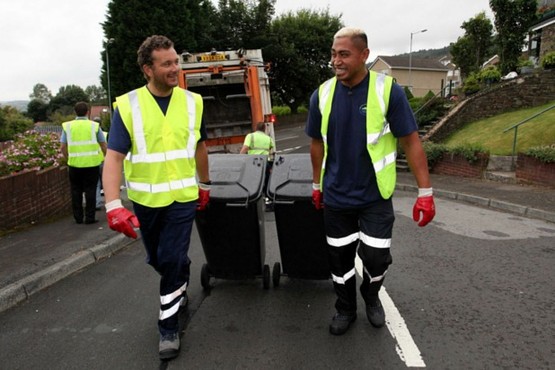
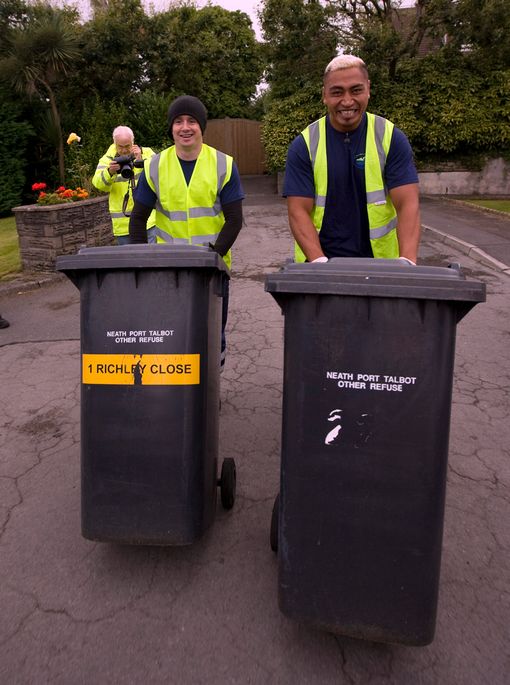
One of my favourite Jerry stories is that he (apparently) continued his day job as a rubbish collector well into his very well paid professional rugby career. He did that because he wanted to keep the fitness it gave him. In New Zealand those guys run all day. That is the sign of a man who has his feet firmly on the ground, not allowing fame to change who he is. (The pictures below was take in Wales while he was playing there, not in Wellington NZ where the above story transpired)

102158422816522

For the next story I will cut and paste from an article in the Telegraph.

Collins was in Devon on holiday after the New Zealand’s surprise quarter-final defeat at the hands of France at the 2007 World Cup. Strolling down the high street, the flanker was spotted by Barnstaple’s then director of rugby Kevin Squire. A photo opportunity turned into a conversation and then an invitation to come down to watch the club in action.

“I said it would be lovely if he could come down to the club and thought nothing of it,” Squire told Telegraph Sport. “Unexpectedly there he was three days later. He watched a first team game and then I introduced him to all the players.

“One of the guys I introduced him to was the Under-13 coach at the club. Consequently in that conversation he was invited to do a training session for the kids, which he astonishingly agreed to do. The following Friday night I went down to watch the training session and the kids obviously were in heaven.”

Then came perhaps the most bizarre debut in rugby history when just a couple of weeks after playing in a World Cup quarter-final, the back-row forward turned out for Barnstaple second XV against Newton Abbott in a Devon Merit Table clash. Collins had asked Squires for run-out but registration regulations prohibited the then Hurricane from appearing for the first XV.

“Again, I never thought he would actually turn up, but there we were waiting for the bus and Jerry shows up after going into town to buy a pair of boots,” Squire said. “By the time we had got to Newton Abbott there had been all sorts of messages between the players and they thought we were bringing a lookalike down with his distinctive white top. It didn’t take long for everyone to realise that it was the real deal. Then their jaws hit the floor.”

As befitting a man with the alternate nicknames of “the Hitman” and “the Terminator”, Collins was renowned for the force of his tackles and even playing at half speed still rattled the bones of a few Newton Abbott players as well as scoring a try.

“He was terrific,” Squire said. “He made everyone in that team feel like they were on the same level as him. The guys from Newton Abbott enjoyed it just as much as our guys did.”

News quickly spread of Collins’ appearance and he would face a disciplinary panel and a fine when he returned to New Zealand for playing without his employers’ permission. He later told Squire that it was worth every dollar.

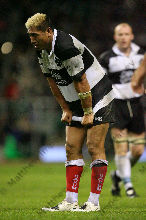
Nor was the end of the association between Collins and “Barum”. A few weeks later Collins turned out for the Barbarians against South Africa, the world champions, wearing Barnstaple socks. “That was his idea,” Squire said. “Everyone in the club had a lump in their throat when he ran out at Twickenham wearing our socks, particularly when the commentator said ‘there’s Jerry Collins, New Zealand and Barnstable Rugby Football Club.’ ”

On Boxing Day 2007, Collins, now playing for Toulon, returned to watch the annual derby against Bideford. “Jerry said he’d be there for the game,” Squire said. “He was in France at the time but he honoured his promise to come over for the game.

“That led to another great night out. Irrespective of the rugby, he was a fun guy who was so down to earth. The world of rugby has not just lost a great player but a great person. It is as simple as that. What he did for Barnstaple will never be forgotten.”

Here are a few pictures of the Barnstaple tale.

????????????????????????????

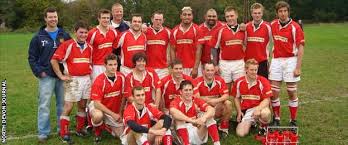
download

download (1)

images

Proudly wearing his Barnstaple socks, while playing for the Barbarians against the Springboks.

Jerry Collins of the Barbarians. Barbarians v South Africa, Twickenham, Rugby Union, 1/12/2007. © Matthew Impey / Wiredphotos.co.uk . tel: 07789 130 347 e: matt@wiredphotos.co.uk

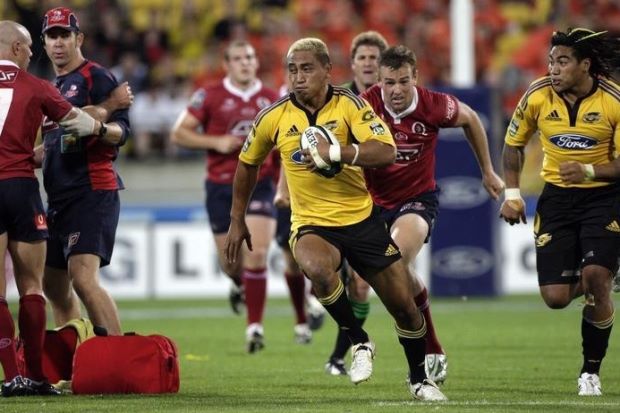
One night I will never forget was when I took my father-in-law who was visiting from South Africa to a game at the Cake Tin in Wellington NZ. The Hurricanes was playing the Sharks and Jerry was coming back from injury. He therefore only featured for 40 odd minutes before being replaced. The Hurricanes thrashed the Sharks by quite an embarrassing margin. While hanging around the stadium waiting for the worst of the spectator traffic to ease, out came Jerry with the rest of the team back onto the park. It was raining as only Wellington can, but Jerry led a brutal fitness session running his teammates until they dropped.  This is absolutely unheard of in professional rugby.

Jerry also got into trouble on more than one occasion with the All Black management for rocking up and playing club games on a Sunday after playing a test for the All Black on the Saturday. Now that is the spirit the game has lost.

20150605T054647Z_1_LYNXMPEB5406Q_RTROPTP_3_RUGBYSUPER

What would I have given to see him playing in this jersey. I would actually settle for seeing a different player with the same attitude and spirit, but no such thing exists in South Africa anymore.

TL_652674

So that is why the bar received the name it did. Thanks Bro, your example continues to inspire.

Jerry-Collins-1

Mother-in-law’s chopping board

2/11/2015

You might remember that I started building an end grain chopping board towards the end of 2014, which was completed early in 2015. Well, my mother-in-law liked it so much that she requested her own version. Here are the two boards I chose for the project. Kershout and Witpeer are both extremely hard and provides the ideal contrast in colour.

IMG_5358

In order to get the most out of this Witpeer board, I had to first chop it into two pieces before ripping it into appropriate strips. You can relax, I did not do the ripping by hand, only this crosscut.

IMG_5361

I then chose the best strips for the first glue-up. These feral boards always have some wood borer art, but that is part of it’s charm.

IMG_5377

Each glue surface was prepared carefully by hand to ensure the best possible bond. I used my no. 606 Bedrock fore plane and a sanding plane for this task.

IMG_5378

The first glue-up was quite stressful given the amount of joints and how quickly the PVA glue sets in our heat and low ambient humidity.

IMG_5379IMG_5380

My shop made flush plane removed the excess glue before the planer got stuck into it.

IMG_5381IMG_5382IMG_5383

After ripping the stock crossgrain into 45 mm wide strips, each strip were turned by 90º in order to expose the end grain. Every second strip were then flip end-to-end to create the chest board appearance.

IMG_5422

9/11/20115

I decided to do the next glue-up in two separate stages as a result of the speed at which the PVA sets. Once again each glue surface were prepared carefully by hand.

IMG_5424IMG_5425

Second glue-up: stage one.

IMG_5423IMG_5426IMG_5428

Second glue-up: stage two.

IMG_5429IMG_5430

Removing excess glue.

IMG_5431IMG_5432

30/11/2015

The most laborious part of this project is without a doubt the hand planing of this large end grain surface. I first sharpened the toothed blade of my Lie-Nielsen low angle (or sometimes referred to as a “bevel-up”) Jack plane as best as my current sharpening skills will let me. Even with a freshly sharpened blade it is extremely hard work, especially in a shop that is averaging between 30 and 35°C during the day in the past month. For that reason I planed in short bursts between other tasks over a 10 day period.

IMG_5490IMG_5491IMG_5492IMG_5493IMG_5501

I removed the bulk of the “toothed” texture left behind by the Jack plane using a Lie-Nielsen scraping plane.

IMG_5519IMG_5520

That was followed by a sanding plane.

IMG_5521

Marked out the final shape.


IMG_5522IMG_5523IMG_5525

The waste was removed with the bandsaw.

IMG_5526

All of the rest of the shaping was done by hand. The Shaw’s Patent (Sargent) Jack plane pictured in the background is set-up as my most aggressive metal plane. I used it to do the bulk of the shaping.

IMG_5527IMG_5528IMG_5529IMG_5530IMG_5531IMG_5532IMG_5533

That was followed by this Stanley no 9½ block plane and finally the sanding plane.

IMG_5534IMG_5535

7/12/2015

The wood borer art I mentioned earlier got filled in with slow setting epoxy to stop water from getting in. To those of you who are going to bring up the issue of epoxy causing cancer in California (or something to that effect), I will refer back to the title of this post. Only joking of course, but here in Africa we have bigger problems than ingesting minute amounts of epoxy. Problems such as corruption, racism, tribalism, nepotism, affirmative action (sometimes referred to as reverse racism), incompetence, to name a few.

IMG_5571IMG_5572IMG_5573IMG_5577IMG_5578IMG_5579

According to my research, liquid paraffin is one of the best oils (for lack of a better term) to apply to wooden surfaces that will come in contact with food, but who knows what it might do in California?

IMG_5583IMG_5580IMG_5581IMG_5582

Japanese toolbox inspired knife and fork carrier – part three

30/11/2015

This will be the final post in this epic series. I am currently experimenting with Japanese joinery and find it very refreshing. I think that it is growing on me and might therefore become an important element in how I design future pieces.

In the picture below you can see how I chopped the through mortises in the handle, which will accommodate two wedges.

IMG_5480IMG_5482

The only parts that were glued were the centre divider into a very shallow dado in the base (as pictured below) and the small wedges that the through tenons received (see later in the post). The two end pieces in the picture below is simply keeping the centre divider in position while the glue cures.

IMG_5481

I used this small Sargent smoother (their equivalent of a no. 2) for the final finishing of the surfaces.

IMG_5483

This was my first time using shellac and it was a real pleasure. In our climate these flakes dissolved in about 20 minutes!! I saw craftsmen from colder parts of the world suggest that you leave it over night. A guy I met in a tool shop in Johannesburg told me that one can dissolve the shellac in “Blou Trein” (or methylated spirits) as I could not find “denatured alcohol” in Namibia or RSA. For some reason the the blue colour has no effect on the finish?? I do not understand how this works, but it does.

IMG_5484IMG_5485IMG_5486IMG_5487IMG_5489

Custom made wedges.

IMG_5504IMG_5505

Wedge slots.

IMG_5506IMG_5507

I used a feeler gauge to work the Titebond into the wedge slots before driving the wedges home with my shop built plane hammer.

IMG_5517IMG_5508IMG_5510IMG_5511

As so.

IMG_5512IMG_5513IMG_5514IMG_5515IMG_5516IMG_5518

So there you go, Bob’s your uncle and Ted’s your aunty! I still have to do a little bit of finishing work on the protruding-wedged-through-tenons, but that essentially concludes this little project.

IMG_5542IMG_5543IMG_5544IMG_5545IMG_5546

I hope you enjoyed the series.

11/1/2016

At the beach house during the 2015 December holidays.

IMG_5776IMG_5777IMG_5778

Tour de shop and project inventory 2015

30/11/2015

Once again, as per usual, it is time to review what happened this year at Je ne sais quoi Woodworking. It has been without a shadow of doubt the most exciting year since starting on this journey in March 2013. The most encouraging aspect was the increase in exposure of the website. Until February 2015 I had no clue whether anyone out there has ever even seen the website.

In February I saw a comment by Siavosh Bahrami on Joshua Klein’s website were he invited woodworking bloggers to contact him if they wanted to be included on his aggregator www.woodspotting.com. I wrote to him and he was most helpful in adding Je ne sais quoi Woodworking straight away. It had an immediate effect on the site’s exposure. I want to thank Siavosh sincerely for the gesture.

Another major bonus of my inclusion was that all of a sudden I found heaps of other blog sites that I did not know of before. In particular, I became good friends with Jonathan White at www.benchblog.com. I really value his thoughts as we have discussed various topics via e-mail since becoming acquainted. Thank you Jonathan, it is a real pleasure to correspond with such a passionate and precise woodworker.

I also met Brian Eve of Toolerable. He seems to be one of the woodworking blogosphere’s glitterati  who knows just about every noteworthy blogger. I was humbled by his gesture to include my site in his Blog list, but he did give me a lot of grief over my choice of string for a bow saw and shop carpet! 🙂 Thank you Brian.

Another new woodworking friend I would like to mention is Robert (Bob) Demers of The Valley Woodworker. He is a real legend in terms of his knowledge of hand tools and allround demeanour. I really appreciate the regular correspondence we’ve had over the past year. Bob and his wife Heather is currently going through a very tough time with her illness and treatment so I would urge everyone who is part of this wonderful online community to show them support. Thank you Bob!

At some point I also wrote to Leif Hanson at Norse Woodsmith. He runs the other major woodworking blog aggregator on his site. Again I was in luck as Leif was so kind as to add Je ne sais quoi woodworking to the aggregator. It led to even more exposure and I would like to thank him immensely for that. Thank you Leif!

Tour de Shop at the end of 2015

The area in front of the shop did not change much, apart from the decking timber added to the sliding gate for more privacy.

IMG_5550

This part of the shop did not change at all, but it is clear from the amount of stuff one the assembly table that I am juggling too many projects at present.

IMG_5540IMG_5541IMG_5547IMG_5548IMG_5549IMG_5551

It has been the first year of working on my shop built bench and it is a real pleasure.

IMG_5552IMG_5553IMG_5555

The bench against the far wall was also built this year.

IMG_5556IMG_5557IMG_5558

As you can see here my collection of kids art grew significantly over the past year.

IMG_5559IMG_5560

No changes here either.

IMG_5561IMG_5563IMG_5562

Project inventory 2015

I started on this chopping board at the end of 2014 and it was probably the first project that got finished in 2015.

IMG_2995IMG_2996

My first real workbench was already assembled by the end of 2014, but received all of it’s armoury in the first few months of 2015.

IMG_3013IMG_3028IMG_3050IMG_3053IMG_3075IMG_3107IMG_3121IMG_3305IMG_3314

Who can forget the inauguration party of the bench.

IMG_3542

An important step in my slow journey towards a hand tool dominant approach was to build two excellent saw benches.

Part 0ne

Part two

Part three

IMG_3927IMG_3929

At Je ne sais quoi Woodworking it was the Year of the Saw. This is a 700 mm blade from Dieter Schmidt in an Assegaai bowsaw based on a L’ art du menusier plate.

IMG_4123

Based on the amount of hits, these holdfast boots I made was definitely my most popular idea/post of the year.

IMG_4444IMG_4455

Speaking of woodworking fame, the series of posts I wrote on building this frame saw earned me an honourable mention by one of my personal icons. Tom Fidgen is one of the leading hand tool woodworkers around the globe. He posted a link to my posts on his site and I want to thank him sincerely for that.

Entro

Part one

Part two

Part three

IMG_4646IMG_4650IMG_4645

Reconditioned this pre-1900 Stanley no. 66 Beadingtool.

IMG_4693

Reconditioned this Shaw’s Patent Jack plane from Sargent.

IMG_4818IMG_4820

Unexpectedly, building another bench ended up being the major project of 2015. I just had to utilise the unbelievable Scotts Pine (Pinus sylvestris) timber I came across by sheer luck.

IMG_5150IMG_5177IMG_5193IMG_5204

Seeing that I am a huge David Charlesworth fan, I just had to find and restore a Bailey no. 5½ Jack plane.

IMG_5213

A rolling pin for the beach house.

IMG_5419IMG_5420

Restored this exceptional type 8 Bailey no. 8 Jointer.

IMG_4754

Built this 12″ bow saw (Please note the string that earned me so much abuse from Brian Eve).

IMG_4128IMG_4130IMG_4131IMG_4132

Hovering skeleton tool chest.

IMG_3473IMG_3475IMG_3484

Japanese toolbox inspired knife and fork carrier.

Part one

Part two

Part three

IMG_5542IMG_5543IMG_5544

Boorish pencil sharpener

IMG_4988

Seeing that the concrete floor in my shop can be harmful to any tool that gets drop, I decided to use this old carpet as a temporary solution. It is hideous, I know.

IMG_4037IMG_4036

Finally, I want to thank everyone who drops in from time to time to read what I am up to. It is much appreciated and I hope that you will come across stuff that will inspire new ideas for your own journey.

Japanese toolbox inspired knife and fork carrier – part 2

2/11/2015

The toolbox is coming along quite nicely and I have to say that it is a pleasure to build something small after all that bench wrestling. You can read part one of this saga here. In the picture below I am digging the last shallow dado in the end pieces to accept the central partition.

IMG_5384

Since starting to use the actual work to mark out the dimensions of related parts, the accuracy of my work has improved significantly. Here I am using the assembled parts to mark out the location of the shoulders of the handle.

IMG_5385

The curve of the Without handle echoes the Cape Dutch inspired lines of the rest of the toolbox. I specifically chose Without as it is also quite light in weight (similar to the Dolfhout) and picks up on the colour of the Dolfhout’s sapwood.

IMG_5387IMG_5388IMG_5389

Marking out the through tenons of the handle.

IMG_5390IMG_5391IMG_5392

Lie-Nielsen tenon saw in action.

IMG_5393IMG_5394IMG_5395

Tenon faces cleaned up with a Stanley no.10 rabbit plane. Once again the proliferation of dog/holdfast holes in this part of my bench allows for so many different work holding options, especially for irregularly shaped objects such as this.

IMG_5396IMG_5397IMG_5398

I used my finger as a fence to roughly mark out guiding lines before doing the shaping of the handle.

IMG_5399IMG_5400

A hand screw clamp together with the twin-screw vise allowed me to work downhill (in terms of the grain direction) on the inside of these curves. The top end of the handle rested on my shoulder while I addressed the curve with a small Buck Brothers drawknife, followed by a Veritas round-bottom spokeshave and finally with a card scraper.

IMG_5401IMG_5402IMG_5404

For the outside curves I used this work holding setup. Notice that the bottom end of the handle hooks on the dog in the leg. This allows for much less pressure needed from the twin-screw vise. While working with softer wood like this, it can be a real bonus.

IMG_5405IMG_5406

So there you go, so far so good. Hopefully the final post on this project will look at finishing and assembly. I plan to use shellac for the first time. Any tips will be appreciated.

IMG_5416IMG_5417IMG_5418

Witpeer rolling pin

2/11/2015

The end of year holiday season is approaching fast, but not fast enough for my liking. For that reason I am doing lots of small projects for the beach house. It almost feels like I am already there, if I am engaged in these projects.

With that in mind I turned a rolling pin this weekend. As you already know, I am the family chef during the holidays so it will come in handy. In order to get to the desired dimensions I laminate three bits of Witpeer. A common problem I tend to encounter with my prehistoric lathe is that it sounds and feels like the whole shop is about to be sent into orbit while the stock is unbalanced. To limit this harrowing experience, I do as much of the rounding work as possible before loading the canon.

In the picture below you can see how one can use a twin screw vise, two dogs and a bit of scrap wood to hold the stock for this type of operation.  I then removed the waste with a very aggressively set Shaw’s Patent no. 5 Jack Plane.

IMG_5408IMG_5409IMG_5410IMG_5412

I usually design stuff like this while turning it.

IMG_5413IMG_5414

Done. Come on summer!!

IMG_5419IMG_5420IMG_5421

The Wiktor Kuc experience

26/10/2015

The first I heard of Wiktor Kuc was on a DVD by Chris Schwarz’s were he showed a North Brothers drill that Wiktor restored. I first got into contact with Wiktor Kuc via e-mail on 5/11/2014. He specialises in the restoration of various boring tools and in particular eggbeater-type hand drills. Wiktor was extremely helpful in terms of discussing the different models of handrills made by North Brothers, Goodell Pratt and Miller’s Falls that would potentially suite my needs. After quite a bit of that we decided on a Miller’s Falls no. 2 (ca 1938) as a general allrounder.

I managed to raise the dough by March 2015, which got me onto the waiting list. As you can see from the screenshot below, Wiktor sent my precious drill to me on the 10th of September. In other words, it takes some time, but believe me it is worth the wait.

I included the drill’s travel itinerary as it is quite amazing how it almost circumnavigated the entire globe to find me in Namibia. Another interesting thing to note is that it took only 11 days to go from Albuquerque to LA, LA to New York, New York to Washington, and Washington to Amsterdam. It then took a whole month from Amsterdam to Namibia!! They probably sent it with a long distance camel via the Sahara desert (or alternatively it might just have something to do with that old saying that goes “This is Africa”).

WK

Anyway, the drill I received after all of this is poetry to say the least. I have to agree with Christopher Schwarz, that Wiktor restores these babies to a condition that is far better than when they were new in the mid 20th century. I have found that it can struggle a bit with the extremely hard native woods I work with predominantly, but it takes no prisoners in slightly softer species. For the real hard stuff I found a Goodell Prat no. 5½B from Jim Bode that has two speeds, but it has not arrived yet. I will report on that in a future post.

IMG_5346IMG_5347IMG_5348IMG_5349IMG_5351IMG_5352

Wiktor is already working on a North Brothers no. 1530 for me to take care of smaller drilling jobs. I can highly recommend his work and customer service. Thank you Wiktor!

Japanese toolbox inspired knife and fork carrier – part 1

12/10/2015

During December holidays at our beach house we spend almost all our time outside on the deck. Every meal is therefore an al fresco affair. I usually do 95% of the cooking over the holiday period, to give the wife a break. Over the past few years it used to irritate me endlessly not having something to carry all the usual utensils, olive oil, salt, pepper etc etc to the table. We cannot leave anything outside, as the monkeys would carry it off in no time. They are real pests and are known as Blou Apies in Afrikaans (Chlorocebus). In the picture below you can see one showing off the blue part of it’s anatomy were it got it’s name from.

blou apie

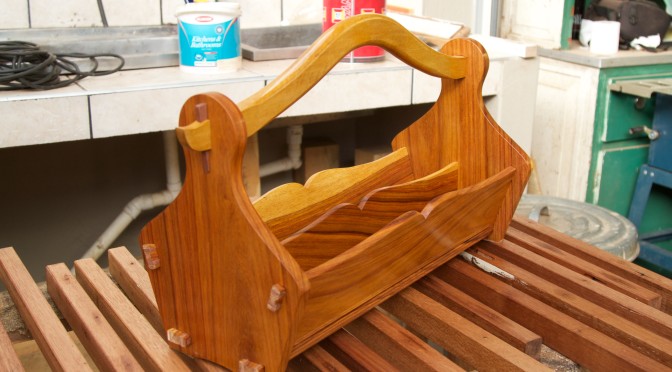
For that reason mentioned above, I decided to build something that can make this chore less frustrating. In the end I settled on the idea of an open toolbox. The joinery was inspired by a Japanese toolbox I saw on the net and the curves and other aesthetic elements probably come from Cape Dutch architecture, which I love dearly.

I found a Dolfhout (Pterocarpus angolensis) board in my collection for the job. As you can see, it has stunning grain patterns with a marked contrast between heartwood and sapwood. The only problem with this particular board is the dramatic changes in grain direction, but I thought it should be fine for a fairly small toolbox which will do very light duty.

IMG_5223

I used the setup below to chop the board into appropriately sized pieces. It should be clear from these pictures how my “overkill” of holdfast holes in this bench continues to be extremely handy for all sort of hand tool operations.

IMG_5224IMG_5225IMG_5226IMG_5227

Here I am ripping one of the pieces with a Disston no. 12.

IMG_5228IMG_5229

This is the design I came up with for the end boards of the tool box.

IMG_5233

The floor/base board has two through tenons on each side that will be wedged.

IMG_5235IMG_5236IMG_5237IMG_5241IMG_5242

Here I am creating the mortises in the end board.

IMG_5243IMG_5244IMG_5245IMG_5246IMG_5247

After the two pieces were fitted I marked out the location of a very shallow dado to accept about 3 mm worth of floor/base board. I used a chisel and no. 71 Lie-Nielsen router plane to remove the waste.

IMG_5248IMG_5344

26/10/2015

Pretty much the same joinery and idea was used for the sides of the toolbox.

IMG_5342IMG_5343IMG_5354IMG_5355IMG_5356IMG_5357

All the joinery fits nicely together at this stage. The tenons will be wedged and left to protrude once the toolbox is assembled.

IMG_5366IMG_5368IMG_5369

I used my reconditioned (pre 1900) no. 66 beader to put beads at the bottom of the sides and the side of the base (where these two parts meet).

IMG_5370IMG_5371

I found this ghastly Stanley plough plane amongst the tools my father never used. It was given to him as a present from work, but he was a power tool woodworker so it never saw any action. Having restored several old Stanley planes, I have to say that this is an embarrassment to the Stanley legacy. The crappy plastic handle defines this tool shaped object. Anyway, it did manage to cut a dado for the divider that slots into the base, but I cannot wait for Lie-Nielsen’s new plough plane that is supposed to be out soon.

IMG_5373IMG_5374IMG_5375IMG_5376IMG_5372

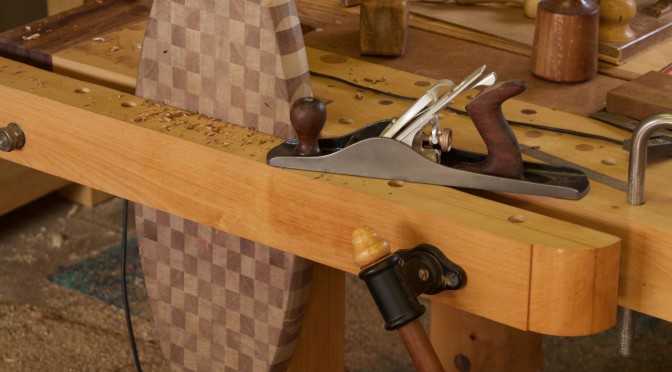
By the way, the featured image is an African sunset on the Mighty Okavango.